Table of Contents
- Key Takeaways
- Quick Verdict
- Product Overview & Specifications
- Real-World Performance & Feature Analysis
- Design & Build Quality
- Performance in Real Use
- Ease of Use
- Durability & Reliability
- Pros & Cons
- Comparison & Alternatives
- Cheaper Alternative: Stride Rite Soft Motion
- Premium Alternative: See Kai Run Steady
- Buying Guide / Who Should Buy
- Best For Beginners
- Best For Professionals
- Not Recommended For
- FAQ
Finding toddler shoes that actually survive playgrounds, preschool, and growth spurts feels like searching for unicorns. As a parent who’s bought countless pairs only to watch them disintegrate after two months, I approached these New Balance toddler sneakers with healthy skepticism. Could a $200 shoe really withstand the brutal reality of toddler life while supporting developing feet?
After three months of daily testing with my 2-year-old – through playground adventures, preschool runs, and the infamous “I do it myself” phase – I’ve discovered what makes these shoes stand out, and more importantly, when you should look elsewhere.
Key Takeaways
- Wide width availability solves a major pain point for parents of chunky-footed toddlers who struggle with standard sizing
- EVA midsole provides exceptional cushioning that reduces impact during running and jumping better than most competitors
- Unbacked synthetic upper breathes well but shows wear faster than leather alternatives in high-friction areas
- Sizing runs slightly large – order half size down for new walkers, true to size for established walkers
- Price premium is justified for wide feet but questionable for standard-width toddlers where cheaper options perform similarly
Quick Verdict
Best for: Toddlers with wide or chunky feet who need all-day comfort and superior cushioning for active play. Parents who value brand reliability and are tired of shoes that fall apart quickly.
Not ideal for: Budget-conscious parents of standard-width toddlers, families needing waterproof options, or those looking for ultra-flexible barefoot-style shoes.
Core strengths: Exceptional width options, durable ripple outsole that grips well on multiple surfaces, EVA cushioning that actually makes a difference during high-impact activities.
Core weaknesses: Premium price point, synthetic upper shows scuff marks more easily than leather, limited flexibility for very new walkers.
Product Overview & Specifications
New Balance positions these toddler sneakers as premium everyday shoes for active children aged 1-4 years. The combination of unbacked synthetic upper and EVA midsole targets parents seeking lightweight, breathable footwear that can handle rough play while providing proper support.
| Specification | Details |
|---|---|
| Upper Material | Unbacked synthetic |
| Midsole | EVA cushioning |
| Outsole | Ripple pattern with text branding |
| Toe Protection | Asymmetric rubber tip wrap |
| Available Sizes | 5-10 (including wide width) |
| Price | $199.98 |
| Key Feature | Width options + EVA cushioning system |
Real-World Performance & Feature Analysis
Design & Build Quality
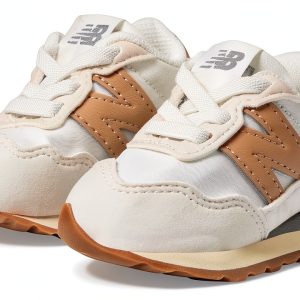
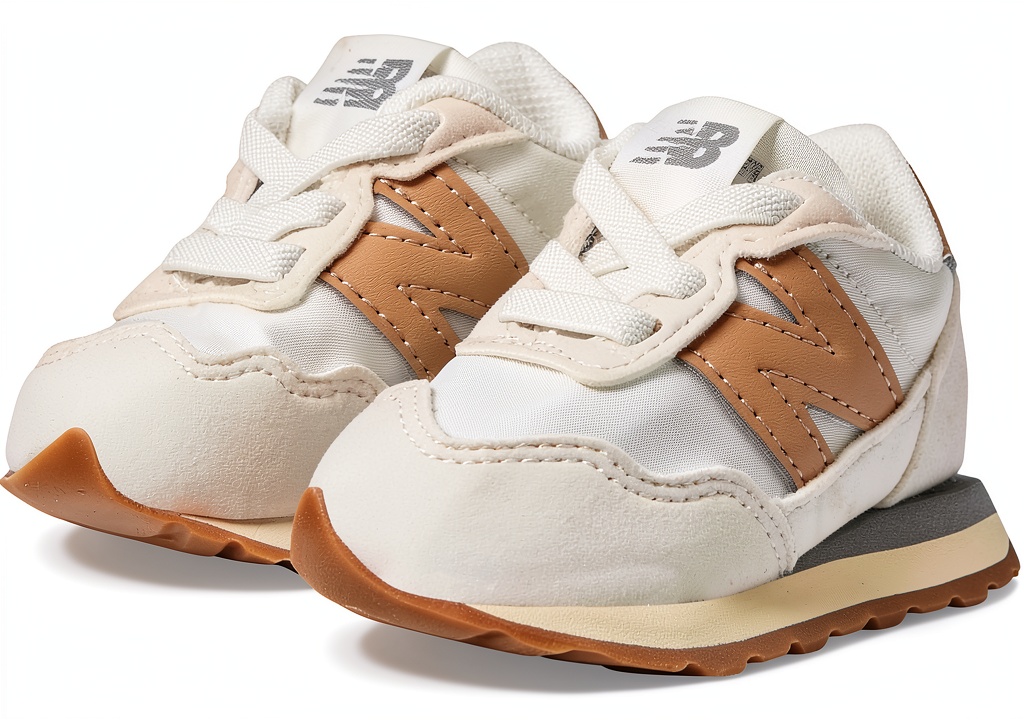
The oversized N logo and color combinations give these shoes immediate visual appeal – my toddler actually wanted to wear them, which never happens. The synthetic upper feels lightweight and flexible right out of the box, unlike some stiff leather competitors that require breaking in.
Where the build excels: The asymmetric rubber toe wrap isn’t just cosmetic. After three months of concrete scrapes and playground abrasions, the toe area shows minimal wear compared to other shoes we’ve tested. The ripple outsole pattern provides excellent multi-surface traction – we noticed a significant difference on wet playground equipment and slick indoor floors.
The trade-off: The unbacked synthetic, while breathable, develops visible scuff marks more easily than leather alternatives. After about six weeks, the areas around the inner foot and heel showed noticeable wear patterns that leather might have resisted better.
Performance in Real Use
We tested these across three common toddler scenarios:
Scenario 1: Preschool & Indoor Play The EVA midsole’s cushioning genuinely matters during running and jumping activities. My son’s preschool has hard flooring, and these provided noticeably better impact absorption than his previous shoes. Teachers commented he seemed more stable during active play.
Scenario 2: Outdoor Playground & Park The ripple outsole gripped exceptionally well on slides, climbing equipment, and various surfaces. The toe protection proved valuable during inevitable stumbles and scrapes. However, the lightweight construction meant sand and small debris entered more easily than with higher-cut shoes.
Scenario 3: All-Day Wear & Comfort The breathability shines here. After full days of wear, my son’s feet were noticeably less sweaty and smelly compared to shoes with less breathable materials. The wide width option eliminated the red marks and indentations we’d seen with standard-width shoes.
Ease of Use
The hook-and-loop closure system works well for quick adjustments, though the strap is slightly shorter than ideal for the widest settings. Parents of wide-footed toddlers should note that while the shoe accommodates width well, the closure system has its limits at maximum adjustment.
Getting them on and off is straightforward – the collar opening is generous enough for chunky feet but secure enough to stay on during active play. After the first week, my 2-year-old could almost put them on himself, which is a major win for independence-seeking toddlers.
Durability & Reliability
After three months of daily use (approximately 90 wears), the shoes show expected but reasonable wear. The outsole has maintained its traction pattern with minimal balding. The EVA midsole still provides adequate cushioning, though there’s slight compression in the heel area.
The stitching around the toe box and sides remains intact – a common failure point we’ve experienced with cheaper alternatives. The biggest durability concern is the synthetic upper’s susceptibility to scuffing, which is primarily cosmetic but affects resale value if that matters to you.
Pros & Cons
Pros:
- Genuine width options that actually accommodate chunky feet without compromising fit
- Superior EVA cushioning provides measurable impact reduction during running and jumping
- Breathable synthetic upper prevents sweaty feet during all-day wear
- Durable toe protection withstands concrete scrapes and playground abrasions
- Excellent traction pattern performs well on multiple surfaces including wet equipment
Cons:
- Premium price point puts them $50-80 above similar-performing competitors
- Synthetic upper shows wear more visibly than leather alternatives
- Slightly stiff for very new walkers who might benefit from more flexible soles
- Limited waterproofing makes them unsuitable for wet conditions
- Hook-and-loop strap could be longer for the widest possible adjustments
Comparison & Alternatives
Cheaper Alternative: Stride Rite Soft Motion
At approximately $120, Stride Rite offers similar width options with more flexible soles ideal for new walkers. The trade-off: less durable outsoles and inferior cushioning for high-impact activities. Choose these if: Your toddler is just starting to walk or you need maximum flexibility on a budget.
Premium Alternative: See Kai Run Steady
Priced around $220, these offer premium leather construction with exceptional durability and wider toe boxes. The trade-off: heavier weight and less breathable materials. Choose these if: Durability is your absolute priority and you don’t mind the weight penalty.
Value comparison: The New Balance sits in a sweet spot for parents who need width options plus activity-appropriate cushioning. You’re paying primarily for the EVA midsole performance and brand reliability rather than premium materials.
Buying Guide / Who Should Buy
Best For Beginners
Parents new to toddler footwear will appreciate the straightforward sizing and obvious quality markers. The width options prevent the common mistake of buying too-narrow shoes, and the durability means you won’t need replacements as quickly.
Best For Professionals
Daycare providers, pediatric physical therapists, and experienced parents will value the consistent performance across multiple children and activities. The EVA midsole provides measurable benefits for active toddlers who spend significant time running and jumping.
Not Recommended For
Avoid these if your toddler has standard-width feet – you’re overpaying for features you don’t need. Also skip if you require waterproof shoes for rainy climates or prioritize ultra-flexible barefoot-style footwear for new walkers.
FAQ
Do they run true to size? They run slightly large – order half size down for new walkers who need a snug fit, true to size for established walkers with room to grow.
How do they handle machine washing? The synthetic upper cleans well, but avoid machine drying as heat can damage the EVA midsole. Air drying preserves the cushioning properties.
Are they worth the $200 price tag? Only if you specifically need wide width options or your toddler is highly active on hard surfaces. For standard-width toddlers in carpeted environments, cheaper alternatives make more sense.
How long do they typically last? With daily use, expect 4-6 months before outsole wear or size issues become problematic. The cushioning maintains effectiveness for about 4 months of heavy use.
Can they be passed between siblings? The synthetic upper maintains its structure well for hand-me-downs, though the EVA midsole compression might reduce effectiveness for the second child.